
Channel Lead, Multifamily & Mixed-Use
Why Turnover Sequencing Is the Real Test of a General Contractor
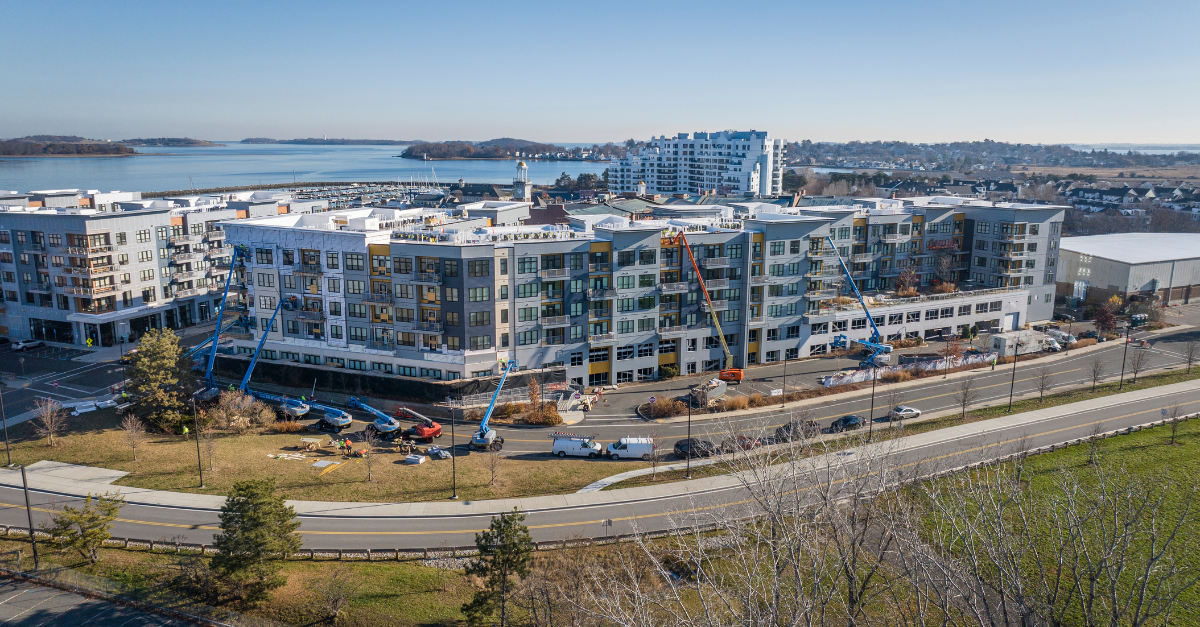
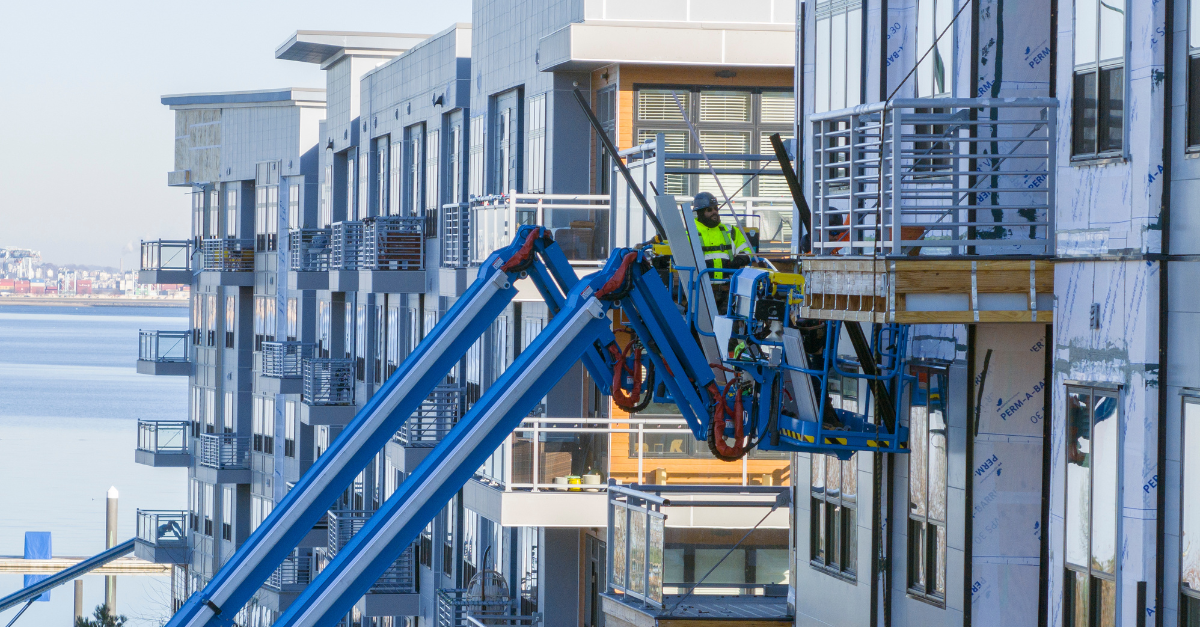
Large multifamily developments are rarely built in one clean push from groundbreaking to grand opening. Most large-scale projects — 150 units, 300 units, a mixed-use podium with retail below and residential above — get delivered in phases. Buildings turn over in groups. Property management takes possession of one wing while crews are still actively working on the next. Leasing starts while cranes, lifts, interior work, etc. is still ongoing.
That overlap is where a lot of multifamily projects lose money, lose schedule, or lose the owner’s confidence — not because the construction itself is unusually difficult, but because phasing and turnover were treated as a scheduling detail instead of a project-wide strategy.
Why Multifamily Projects Get Phased in the First Place
Phasing isn’t just a construction convenience. It’s typically driven by the business plan behind the development.
Financing structures often require partial certificates of occupancy so the project can start generating revenue before the entire development is complete.
Absorption and leasing strategy may call for smaller batches of units to hit the market on a staggered basis rather than flooding it all at once.
Site constraints, such as a single buildable parcel, one access point, or limited laydown area, may make sequential construction the only practical option.
Amenity and infrastructure sequencing can also play a role, with the clubhouse, parking structure, and main utilities needing to come online ahead of, or in step with, specific unit blocks.

The Core Challenge: Two Different Operating Realities on One Site
Once the first phase turns over, the project stops being a single-purpose construction site. It becomes two things at once:
Every phased multifamily project has to manage the friction between those two realities. That friction shows up in a few predictable places:
Life Safety and Egress
Fire lanes, egress routes, and life-safety systems can’t be compromised by ongoing construction, even temporarily. A phasing plan has to define — before the first phase turns over — exactly how fire access, sprinkler systems, fire alarm monitoring, and emergency egress will be maintained for occupied buildings while adjacent phases are still under construction. This often requires temporary life-safety measures, phased fire watch, and close coordination with the local fire marshal on inspection sequencing.
Site Logistics and Separation
Construction traffic, material staging, and trade parking need to be physically and operationally separated from resident traffic, guest parking, and leasing tours. On a tight urban infill site, this can mean temporary fencing, dedicated construction entrances, phased parking allocation, and a logistics plan that gets revised every time a new phase breaks ground or a completed phase turns over.
Noise, Dust, and Nuisance Management
Residents in a turned-over building are paying full rent while a crew is pouring concrete or running a saw cut 150 feet away. Managing resident experience during ongoing construction — work-hour restrictions, dust control, noise notifications, and a clear communication channel for complaints — isn’t a “nice to have.” It directly affects the owner’s leasing velocity and reputation in the market.
Building the Turnover Sequence Into the Master Schedule — Not After It
The most common mistake on phased multifamily projects is developing the construction schedule first and treating turnover milestones as a layer added on top. That sequence should be reversed.
A well-built master schedule works backward from turnover requirements: Certificate of occupancy pathway for each phase, including the specific inspections and sign-offs required by the AHJ. Punch list and unit-readiness timeline, distinguishing between “substantially complete” and “move-in ready.” Property management transition point — the date operations formally takes over a phase, including keys, warranties, as-builts, O&M manuals, and system training. Marketing and leasing lead time, since model units, leasing office readiness, and amenity access often need to precede the first move-in by weeks/months. Punch-back and warranty window, which has to be staffed and budgeted even as the team is mobilizing on the next phase.
When these milestones are built into the schedule from the start, the construction team can sequence trades, inspections, and closeout activity around them — rather than compressing closeout into a scramble at the end of each phase.
What a Strong Turnover Package Actually Includes
“Turnover” often gets treated as a single event — the day property management gets keys. In practice, it’s a package of deliverables that needs to be substantially complete before that date, not assembled after it:
Final punch list, verified and signed off by trade. Certificate of occupancy and any phased or temporary occupancy documentation. As-built drawings and specifications. Equipment O&M manuals and warranty documentation. Life-safety system testing and inspection records. Building automation and access-control training for on-site staff. Unit-by-unit readiness confirmation (appliances, finishes, keys, HVAC commissioning). Common-area and amenity readiness, if tied to that phase.
Projects that treat this as a checklist assembled in the final two weeks before turnover almost always slip the date. Projects that build this package incrementally — closing out documentation phase by phase, floor by floor, as work is completed — turn over on schedule with far fewer post-occupancy punch items.
Coordinating Trades Across an Active/Occupied Boundary
Once a phase turns over, trade coordination gets more complicated, not less. Crews still need access to shared systems, sometimes through occupied common areas, sometimes adjacent to units with residents inside them.
A few practices consistently reduce friction here:
Escort and access protocols for trades needing to enter occupied buildings for tie-ins, punch work, or shared-system access. Advance notice windows for any work affecting an occupied building’s utilities, elevators, or life-safety systems. A single point of contact between the construction superintendent and the property manager, so resident concerns and construction realities get resolved through one channel instead of getting lost between site staff and management staff. Clear demarcation of “complete” versus “in progress” areas, both physically (barriers, signage) and administratively (who has authority to approve access, changes, or schedule adjustments in each zone).
Budgeting for Phased Delivery — Not Just Phased Construction
Multi-phase projects carry cost implications that a single-phase budget doesn’t need to account for:
Remobilization costs for trades returning to a later phase after demobilizing from an earlier one. Temporary infrastructure — fencing, temporary utilities, temporary life-safety systems — that gets built, maintained, and eventually removed as phases progress. Extended general conditions, since the overall project duration for a phased delivery is typically longer than a comparable single-phase build. Duplicate or redundant systems during transition windows, when a later phase needs infrastructure that an earlier, occupied phase is already relying on. Punch-back and warranty staffing that has to run concurrently with new-phase construction, not sequentially after it.
The Bottom Line
Phased multifamily construction isn’t harder because the buildings are more complex. It’s harder because the project has to function as a construction site and an occupied community at the same time, for months or years, while both realities keep moving. The projects that turn over cleanly — on schedule, with a short punch list, and a smooth handoff to property management — are the ones where the phasing and turnover plan was built into the project from preconstruction, coordinated continuously with the design team and ownership, and treated as a shared operational plan rather than a construction milestone added at the end.
For owners and developers evaluating a general contractor for a phased multifamily project, the right question isn’t just “can you build this.” It’s “how do you sequence occupied turnover against ongoing construction without disrupting either one.” That answer says more about how the project will actually go than the proposed schedule duration ever will.